District VII (Erzsébetváros): An Expat's Guide to Budapest's Jewish Quarter (2026)
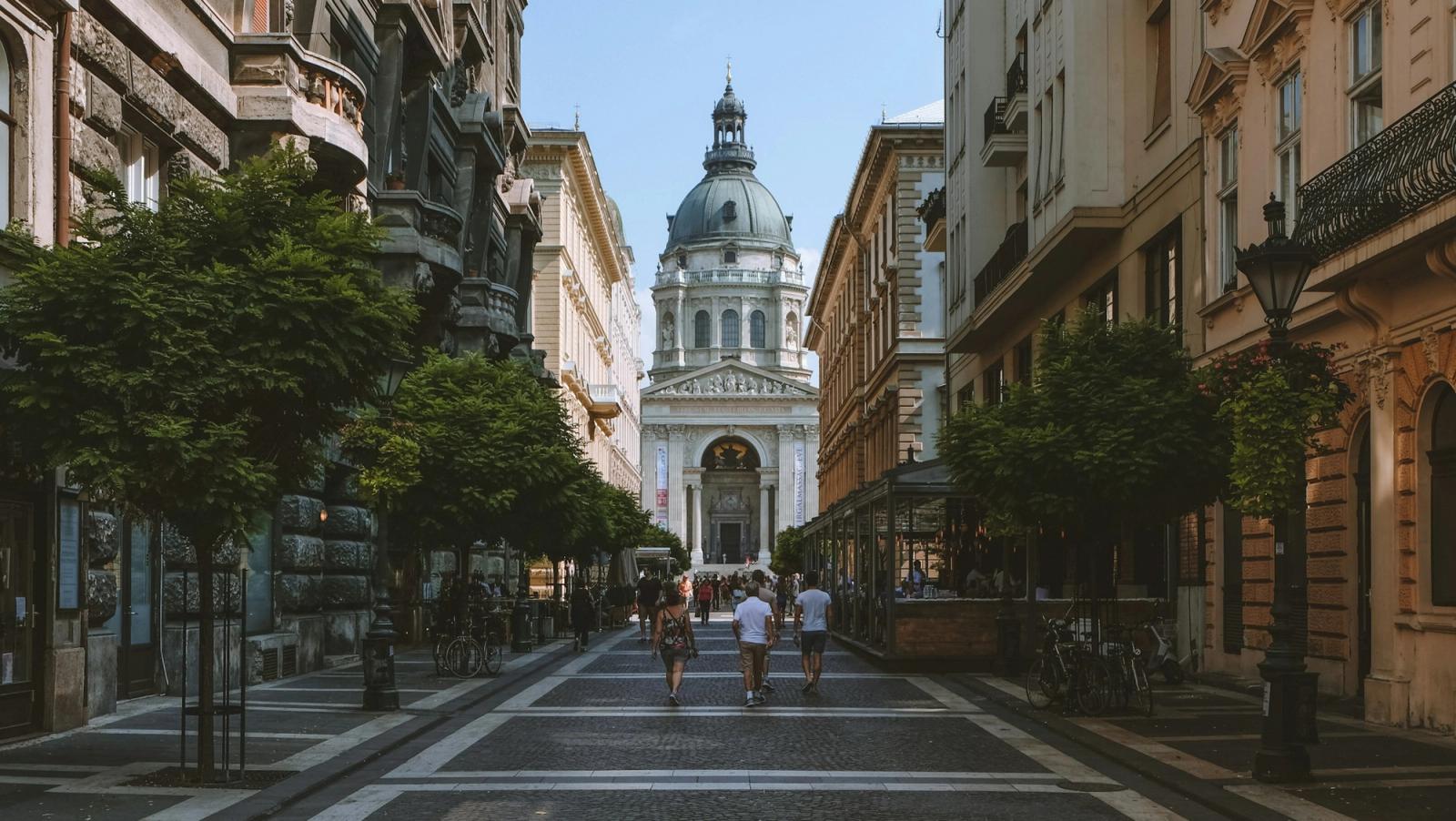
District VII — Erzsébetváros, Budapest's old Jewish Quarter — is the city's most energetic central neighbourhood: ruin bars and street art on one corner, 19th-century synagogues and courtyard cafés on the next. It's where expats and locals mix most, it's walkable to everything, and at around 1.49 million HUF/m² it's cheaper than neighbouring Districts V and VI. The trade-off is noise — the party core runs well past midnight. Brilliant for young professionals and investors; light sleepers should pick a quiet side street.
If Budapest has a beating heart, it's here. District VII — officially Erzsébetváros, but everyone calls it the Jewish Quarter — packs more life per square metre than anywhere else in the city: Europe's largest synagogue, the original ruin bars, some of Budapest's best food, and building-sized murals, all in a few walkable blocks of central Pest. It's the district expats gravitate to first, and for good reason.
This guide is about what it's actually like to live here — the vibe, who it suits, the catch (noise), what your money buys and how to get around — with honest pros and cons. For the wider picture, see our guide to the best Budapest districts for expats, and for prices across the city, the district price index.
The vibe: history and nightlife on the same block
Erzsébetváros is a study in contrasts. By day it's cafés, brunch spots, design shops and the solemn beauty of the Dohány Street Synagogue — at 3,000 seats, the largest in Europe. By night the same streets — Kazinczy, Dob, Király — become the ruin-bar district, where crumbling old buildings like the legendary Szimpla Kert have been turned into sprawling, plant-filled, mismatched-furniture bars that defined Budapest's nightlife. Add Gozsdu Udvar, a passage lined with bars and restaurants, and the city's densest cluster of murals, and you have a neighbourhood that never quite switches off.
Who it suits (and who it doesn't)
District VII is made for people who want to be in the middle of it: young professionals, couples, creatives, remote workers who like a café-and-bar scene on the doorstep — and investors, because the central location plus tourist demand makes it one of the strongest short- and long-let markets in the city.
It suits families and light sleepers less well, at least in the core. There's little green space, and the party zone — roughly Kazinczy, Dob, Király and Wesselényi streets — is genuinely loud at weekends. The fix is simple once you know it: the district is small, and a flat two or three streets back from the bars, toward the Grand Boulevard or up near City Park, is calm while still a five-minute walk from everything.
What your money buys
At a median of about 1.49 million HUF per square metre, District VII sits in the middle of the Budapest range — noticeably below neighbouring Districts V and VI but above the outer districts. For a central, characterful location that's good value: an 80 m² flat works out around 119 million HUF (~€300,000), and the smaller one-beds that are the bread and butter of the rental market here come well under that. You can see current District VII prices and what's on the market on the District VII listings.
The housing stock is mostly classic Pest: tall 19th- and early-20th-century buildings with high ceilings, big windows and interior courtyards, many beautifully renovated, some still rough and cheaper for it — plus a handful of new-builds. If you're buying, our guides walk you through how to buy as a foreigner and the transfer tax and fees.
Getting around
You'll barely need transport — that's the point. District VII is wedged between the Grand Boulevard (Nagykörút) and the inner city, so most of central Pest is a 10–15 minute walk. When you do need it, the M2 metro clips the southern edge (Astoria, Blaha Lujza tér) and the M1 runs close by (Opera, Oktogon); trams 4 and 6 — the city's busiest line — run along the Boulevard around the clock, with night buses covering the rest. A car is more hassle than help here: parking is scarce and paid.
The catch: noise and crowds
Let's be honest about the downside, because it's the one thing that makes or breaks living here. The ruin-bar core is loud — music, crowds and stag parties spilling out until the early hours, especially Thursday to Saturday. The city has tightened the rules on the worst of it (organised pub crawls and late-night noise are increasingly restricted), and it's an ongoing tension between residents and nightlife. The party zone also draws pickpockets at night, as any busy tourist area does — by day the district feels completely safe and is rapidly gentrifying. The practical takeaway: love the energy but value your sleep? Buy or rent a couple of streets off the main strip and you get the best of both.
Frequently Asked Questions
Is District VII in Budapest a good place to live?
Yes — especially for young professionals, couples, remote workers and investors who want to be in the centre of everything. It's Budapest's most walkable, sociable district, with the city's best food and nightlife and good-value prices. Families and light sleepers tend to prefer quieter districts like II or XII, or a calmer street within VII away from the ruin-bar core.
Is District VII (the Jewish Quarter) safe?
By day, very — it's central, busy and increasingly gentrified, and you'll feel comfortable anywhere. At night the party core attracts pickpockets, as any nightlife area does, so keep an eye on your phone and bag. Violent crime is rare; the main issue is noise rather than safety.
How much does it cost to buy in District VII?
The median is around 1.49 million HUF per square metre (2026), so an 80 m² flat is roughly 119 million HUF (~€300,000). That's mid-range for Budapest — cheaper than neighbouring Districts V and VI, more than the outer districts. Smaller one-bedroom flats, popular with investors, cost considerably less.
Is District VII too noisy to live in?
In the party core — around Kazinczy, Dob and Király streets — it genuinely is at weekends. But the district is small, and a flat a few streets toward the Grand Boulevard or City Park is quiet while keeping everything within a short walk. Where you buy within VII matters more than the district average.
Is District VII good for property investment?
It's one of Budapest's strongest rental markets — central, walkable and in constant demand from tourists, students and young professionals, which supports both short and long lets. Combined with mid-range entry prices, that makes it a perennial investor favourite. Check current listings and yields before committing.
What's the difference between District VII and District V?
District V (Belváros-Lipótváros) is the polished, pricier historic centre — government buildings, riverfront, high-end shops. District VII is grittier, younger and more bohemian, with the ruin bars and creative scene, at noticeably lower prices. Many expats prefer VII's energy and value; others pay the premium for V's calm and prestige.
Thinking of buying in District VII?
Browse homes for sale in District VII and see current District VII prices on Housiko. If you're buying, our guides walk you through how to buy as a foreigner, whether you're eligible and the transfer tax. Comparing areas? Start with the best districts for expats and the citywide price index. Selling a place here? Get a free valuation. Renting instead? Here's how renting works in Budapest.