Where to Live in Budapest: An Expat's Guide to the Best Neighbourhoods
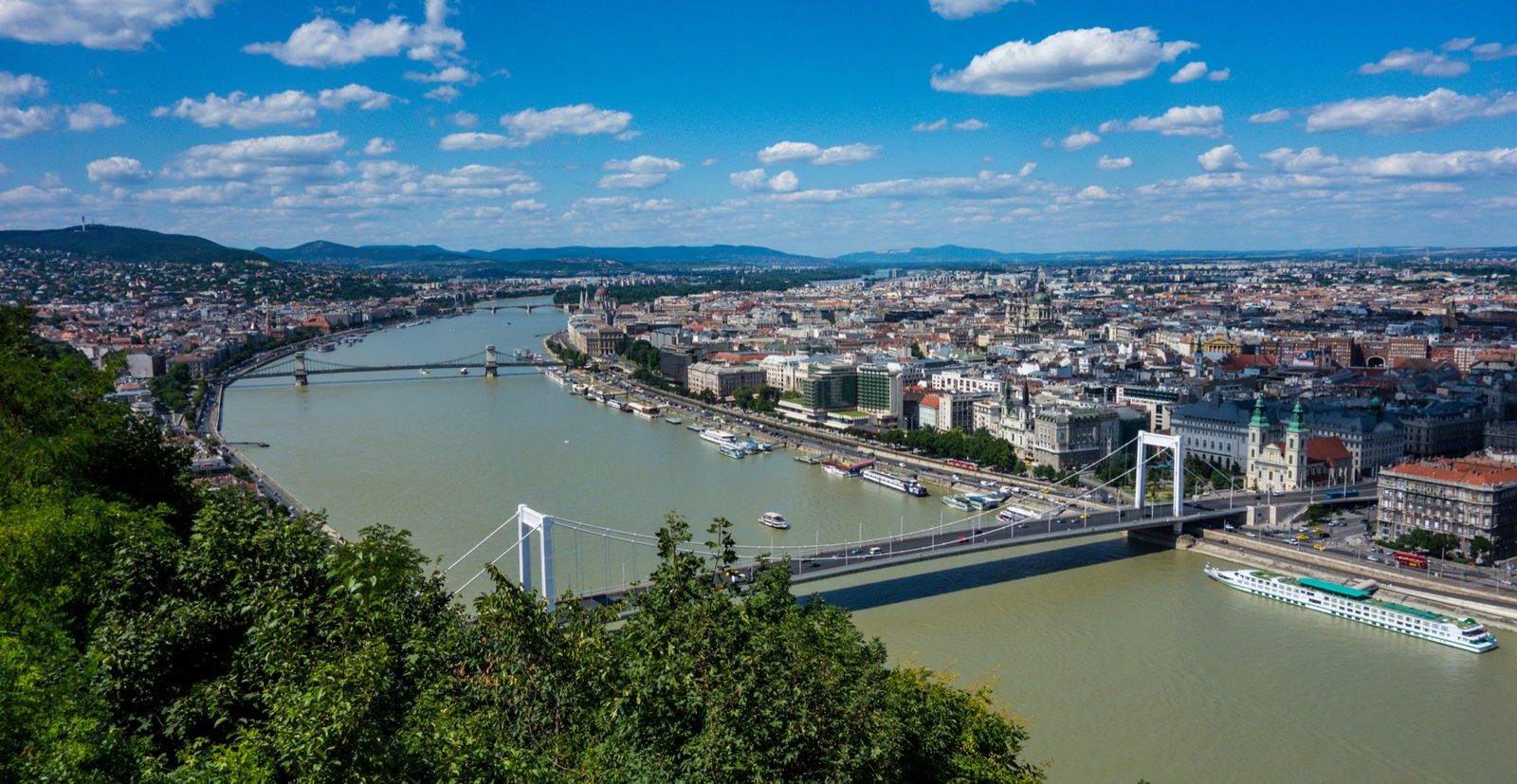
Ask ten expats where to live in Budapest and you'll get ten different answers, because the city isn't really one place. It's two dozen districts, each with its own personality, prices and rhythm, and the one you choose will shape your daily life far more than the flat you end up signing for.
Here's the honest short version before the detail. If you want to be where everything happens, start in Districts V, VI or VII. If you'd rather have calm without giving up the centre, look hard at District XIII. Chasing value, Districts IX and XI give you the most flat for your forint. And if you've got kids, or you're just done with city noise, cross the Danube into Buda. Either way, I'd check what each area actually costs on the Budapest price index before you fall for any of them.
What follows is the rundown I give friends when they move here: every neighbourhood worth a look, what it's genuinely like to live there, and where to search once you've got a shortlist.
Buda or Pest? Pick a Side of the River First
The Danube doesn't just split Budapest in two, it splits it by temperament. Pest, the flat eastern bank, is the engine room: dead-straight boulevards, six-storey apartment houses, the restaurants and bars, four metro lines, the noise. You can live there for years without ever owning a car. Buda, climbing the hills on the western side, is the opposite: leafy, low-rise, residential, full of gardens and views and streets where you hear birdsong instead of trams.
Most newcomers land in Pest first, because that's where the action and the rentals are. A good number drift over to Buda a few years later, usually around the time a second bedroom starts to matter.
The Best Districts in Budapest for Expats
These are the neighbourhoods that come up again and again with Budapest's international crowd, running roughly from the prestige centre outwards.
District V — Belváros & Lipótváros (the prestige centre)
This is the Budapest of the postcards: the Parliament, the Basilica, Szabadság tér, the Danube promenade. The streets are grand and spotless, almost everything is walkable, and it feels safe at any hour. It's also the most expensive postcode in the city, with very few large family flats, so it tends to draw professionals, couples and the odd embassy.
If your budget can take it and you want to be in the middle of everything, nothing else competes. Have a look at the District V price trends and the flats currently for sale there.
District VI — Terézváros (Andrássy elegance, with a pulse)
Walk up Andrássy út, the tree-lined avenue UNESCO fell for, and you're in District VI: the Opera House, the old coffee houses, and the M1, continental Europe's oldest metro line, still rattling along under the road. Around Liszt Ferenc tér it all loosens up into café terraces and a younger, artsier crowd.
It's nearly as pricey as V but with more character and more going on after dark. I usually point professionals and anyone who cares about culture here, especially if you want the elegance without the tour groups. Here are the current District VI prices.
District VII — Erzsébetváros (the Jewish Quarter and the nightlife)
This is the district everyone visits and plenty want to live in: the old Jewish Quarter, home to Szimpla Kert and the whole ruin-bar phenomenon, plus Gozsdu Udvar, the street food, the Great Synagogue and a permanently international crowd. It's enormous fun and impossibly central.
It's also loud. The inner streets around Kazinczy utca turn into an open-air party at weekends, stag dos and all, and rents have climbed with the hype. Younger expats and night owls love it; if you value your sleep, take a flat a couple of blocks out or look at District XIII next door. Rentals in District VII move quickly, and you can check the prices here.
District XIII — Újlipótváros (the all-rounder)
If you put a gun to my head and asked for one district that suits most expats, I'd say Újlipótváros. Just above the centre, it's calm tree-lined streets, handsome Bauhaus blocks from the 1930s, the Lehel market, good bakeries, the river, and Margaret Island five minutes away for your morning run. Pozsonyi út is the sort of café-lined street people compare to a quieter corner of Vienna.
It's central enough to walk into town and calm enough to actually unwind, which is exactly why couples and young families keep choosing it. District XIII prices sit a notch below the prime centre, and the rentals here are worth watching.
District IX — Ferencváros (the comeback story)
Ten years ago you might have skipped Ferencváros. Not anymore. The Corvin Quarter is full of new builds, Ráday utca is a proper café strip, and the riverside around the Bálna and Müpa has arrived. The M3 and M4 plus a web of trams make getting around easy.
This is where your budget stretches furthest near the centre, which is why young professionals and investors keep buying in. You can compare District IX prices or see what's for sale. Students land here too, close to the universities; our student housing guide has the rest.
District XI — Újbuda (value on the Buda side)
Cross to Buda and the value gets better still in Újbuda. The 4/6 tram and the M4 put you in the centre in minutes, the Gellért baths and the river are on your doorstep, and Bartók Béla út has quietly become one of the nicest café-and-gallery streets in town. There's a big student presence thanks to the technical university, plus families who want a bit of space without going full suburb.
Practical, unpretentious, good value. The District XI prices tell the story.
Districts II & XII — the Buda hills (green and grown-up)
Keep climbing and you reach Districts II and XII, the leafy, well-heeled residential belt. Rózsadomb is where the villas and the views are; Normafa, up top, is where half the city goes walking on a Sunday. Expect gardens, bigger flats and houses, and proper quiet.
The trade-off is obvious: you give up walkable nightlife and you'll likely want a car for the steeper streets. For families, or anyone finished with city noise, it's the dream. The District II prices reflect the address.
The Cheat Sheet: Which District Fits You?
Still torn? This is the shortcut I'd give you:
- Noise, nightlife and the centre: V, VI, VII
- Quiet but still central: XIII
- Most flat for your money: IX or XI
- Moving with family: II, XII or XI
- A prestige address: V, or II up on Rózsadomb
Renting vs. Buying as an Expat
Renting is the smart first move. It lets you actually live in a neighbourhood before you commit to it, and Budapest rents are still a fraction of London, Paris or Berlin, even after the central districts crept up. It's worth browsing what's available to rent or buy across the city just to calibrate your expectations. When you're ready to sign, our full guide to how to rent an apartment in Budapest covers the contract, the deposit and what the bills really add up to.
Buying is more accessible than most newcomers assume. If you hold an EU or EEA passport, you buy exactly like a Hungarian. Everyone else needs a municipal permit, which sounds scarier than it is; in practice it's a formality and routinely granted. Prices are still low by Western European standards, so a lot of expats end up buying, whether to settle or to invest. If you're weighing an offer or already own something, a quick property valuation will tell you where you stand.
How Much Does It Cost to Live in Each District?
I'm deliberately not quoting exact price-per-square-metre figures here, because they date within months and they swing wildly from one street to the next. Live data is the only thing worth trusting. Our Budapest price index tracks current asking prices for every district, so you can line your shortlist up side by side and see where your budget actually reaches. If you want that in one sitting rather than page by page, the July 2026 index ranks all 23 districts in a single table.
Pick two or three districts, open the price index for each, and compare price per square metre. It's the fastest reality check before you start booking viewings.
How to Choose Your Neighbourhood
Beyond the money, four things usually decide it:
- Commute. Be honest about where you'll actually go most days. The M1 to M4 metros and the 4/6 tram cover most expat areas, so aim for somewhere a short ride from your routine.
- Lifestyle. Restaurants and bars at your door (Pest), or parks and quiet (Buda)?
- Noise. Inner VI and VII stay lively late; XIII, XI and the hills are calm.
- Space. Schools, parks and bigger flats point you to XIII, XI, II and XII.
Whatever your shortlist looks like, do one thing before you sign: spend a couple of evenings and a Saturday walking the streets. A district that's charming at 11am on a Tuesday can be a different animal at midnight on a Friday, and that's exactly the version you need to meet first.
Frequently Asked Questions
What's the best district in Budapest for expats?
There isn't a single one, and anyone who gives you a one-word answer is probably selling something. District V is the most prestigious, XIII the best all-rounder, IX and XI the best value, and II and XII the best for families. The right one is simply the one that matches how you actually live.
Is it better to live in Buda or Pest?
Pest if you want to be where things happen and walk everywhere; Buda if you want green space and quiet. Most expats start in Pest and a fair few move over to Buda once they want more room.
Which areas of Budapest are safest?
Budapest is a safe city by European standards, full stop. Districts V, XIII, II, XI and XII are the calmest and most comfortable. The one place to keep your wits about you is the busy nightlife strip of inner District VII late at the weekend, and even that's more rowdy than risky.
Can foreigners buy property in Budapest?
Yes. EU and EEA citizens buy on the same terms as locals. Everyone else needs a municipal permit, which is a routine administrative step rather than a real obstacle. You can value any property in a couple of minutes to sanity-check a price.
Which district is best for families?
The Buda hills (II and XII) for space and greenery, and XI for the balance of parks, schools and good transport. XIII works too if you want to keep one foot in the centre.
Where do most expats actually live?
On the Pest side it's V, VI, VII and XIII; on the Buda side it's II, XI and XII. That split, central-and-lively against green-and-calm, covers most of the international community.
How much does it cost to rent or buy in Budapest?
Less than almost any Western European capital, though it leans heavily on the district and the moment. The Budapest price index has current numbers for every area.
Find Your Budapest Neighbourhood
So: work out which side of the river you're on, shortlist two or three districts, and pressure-test them against your budget and your commute. When you're ready, compare district prices, value a specific place, or start browsing homes, and walk the streets before you commit. The right neighbourhood isn't the cheapest or the trendiest. It's the one that fits the life you're actually going to live here.